 The Concussion Hub
Understanding concussion
What happens in the brain, how long recovery takes, and what people wrongly believe.
What is a concussion?
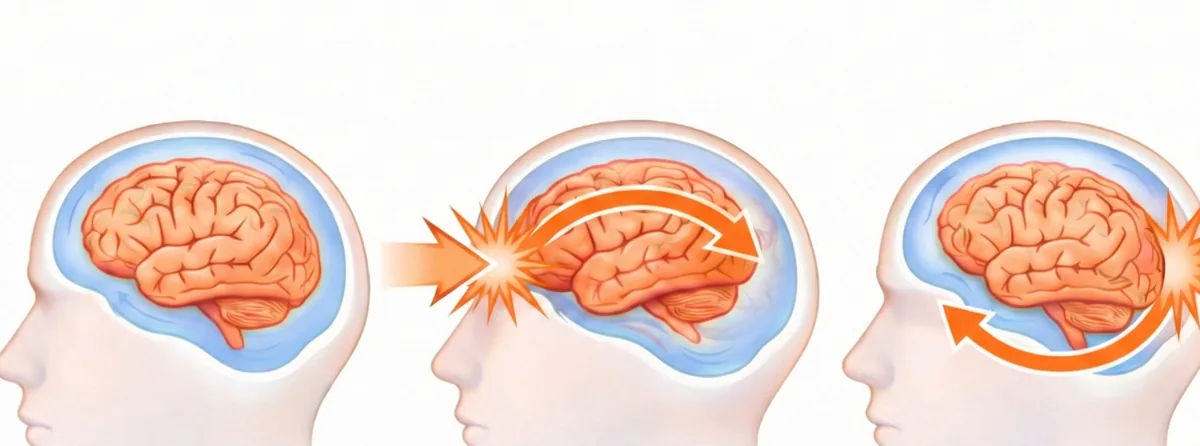
A temporary disturbance in the way the brain works, caused by a knock. The brain is shaken inside the skull.
- A problem of function, not an injury that shows on a scan.
- Often with no loss of consciousness.
- Standard CT and MRI scans are often normal: they are used to rule out a more serious injury.
- Not only the head: a blow to the body can be enough, if the head is jolted.
When do the signs appear?
Straight away, or in the minutes, hours or even days that follow. One sign is enough to suspect a concussion.
Source: Amsterdam 2022 consensus statement (BJSM, 2023).
How long does recovery take?
Most often, a few days to a few weeks. It varies from one person to the next: no single timescale fits everyone.
10 days
About 93% of athletes, of all ages, are back at school in full, with no extra support.
20 days
The average time before an unrestricted return to sport.
More than 4 weeks
Symptoms are described as persisting. An assessment by a specialist team is then recommended.
Source: Amsterdam 2022 consensus statement (BJSM, 2023).
How can you help the brain recover?
- The first 24 to 48 hours: relative rest. Quiet activities, no strict bed rest, less screen time.
- After that: a step-by-step return, guided by symptoms. School or work first, sport second.
What do people wrongly believe?
Seven common beliefs, and the facts.
“You have to be knocked out to have a concussion”
No. A concussion can happen without any loss of consciousness, with only confusion, a headache or dizziness.
“They weren’t hit on the head”
A tackle, a fall or a blow to the body can be enough, if the head is jolted. The brain then moves inside the skull, with no direct contact.
“They were wearing a helmet, so they’re protected”
A helmet protects against skull fractures, not against concussion. The brain still moves inside the skull.
“The scan is normal, so there’s no concussion”
A standard CT or MRI scan does not show a concussion. These scans are used to rule out a more serious injury, such as a bleed or a fracture. A concussion is recognised from the symptoms and from what happened.
“They feel fine, so they can carry on”
Symptoms can appear or get worse in the hours that follow. The rule: no return to play on the day of a suspected concussion.
“It’s been two weeks, so they can go back”
Every brain recovers at its own pace. Symptoms decide, not the calendar. The return is made step by step.
“You shouldn’t let someone sleep after a knock to the head”
Not so: let the person sleep. But do not leave them alone for the first 3 hours, and call emergency services if an emergency sign appears.
When should you seek care?
Straight away: emergency services
As soon as just one of the 10 emergency signs is present.
Within 24 to 48 hours: a doctor
For any suspected concussion: to confirm the diagnosis and get advice that fits the person.
If symptoms last more than 4 weeks
Ask for a specialist assessment. Your doctor will refer you: neurologist, sports doctor, neuropsychologist or specialist centre.
For a child
The return to school comes first, and parents take part in the decisions about the return.
Source: persisting symptoms and the role of parents: Amsterdam 2022 consensus statement (BJSM, 2023).
For the appointment, note down
- The time and circumstances of the knock
- The symptoms seen and how they have changed
- Any previous concussions
- Any medication taken
What can make recovery take longer?
- Previous concussions. A past concussion can make the next one slower to recover from.
- Migraines. Symptoms can be stronger and last longer.
- Attention difficulties. Problems with concentration can be amplified.
- Anxiety or depression. They can complicate recovery.
- Young age. A developing brain calls for more caution.
- Disturbed sleep. Sleep problems in the first 10 days are linked to a higher risk of persisting symptoms.
Source: sleep: Amsterdam 2022 consensus statement (BJSM, 2023). The other factors are still to be confirmed by the medical review.
Why not go back too soon?
A brain that has not finished recovering reacts more slowly: reflexes, coordination, attention. Going back too soon exposes you to another concussion and to other injuries.
Frequently asked questions
Can my child watch TV or play video games?
Cut down on screens for the first 48 hours. Then bring them back little by little, as long as symptoms do not get worse.
How long does a concussion last?
Most often, a few days to a few weeks. About 93% of athletes are back at school in full after 10 days, and an unrestricted return to sport takes 20 days on average. Beyond 4 weeks, symptoms are described as persisting.
Do you need emergency care after every knock to the head?
Not every time. But call emergency services as soon as just one of the 10 emergency signs is present. Whenever a concussion is suspected, have the person seen by a doctor. See the 10 emergency signs.
Can my child go to school the next day?
The first 24 to 48 hours are a time of relative rest at home. The return to school then happens in steps. See the return to school.
Can you take paracetamol or ibuprofen?
No medication without advice from a doctor or pharmacist. Ask them what is suitable after a knock to the head.
When can you go back to sport?
Step by step, after a full return to school or work. Before any activity with a risk of a knock to the head, a doctor must give the go-ahead. See the return to sport.
Is a second concussion more serious?
It can be. Another knock before recovery is complete must be avoided at all costs: that is the whole point of a step-by-step return.
Can symptoms appear later?
Yes. They can appear straight away, or in the minutes, hours or even days that follow. Keep an eye on the person during that time.
Should you wake someone up after a knock to the head?
No, let the person sleep. But do not leave them alone for the first 3 hours, and call emergency services if an emergency sign appears.
And where does Holisquare come in?
What Holisquare offers
Holisquare, which publishes this site, is a centre for perceptual-cognitive assessment and training near Lausanne, Switzerland. Its support is not medical and does not replace a medical consultation.
- In prevention: a baseline assessment, to compare new measures with after a knock.
- After a knock, alongside medical follow-up: a perceptual-cognitive assessment and adapted training.
Transparency
Holisquare develops and sells these services. The information on this site does not depend on them: it comes from the Amsterdam 2022 consensus statement and the CRT6.
Holisquare’s tools must also prove themselves, on the results they claim.